Housewren
A family assistant that lives on our own Raspberry Pi
An AI assistant for the whole household that runs on a Raspberry Pi at home: who is home, lights and heating, the family calendars, receipts and bills, and routines that run only after you switch them on.
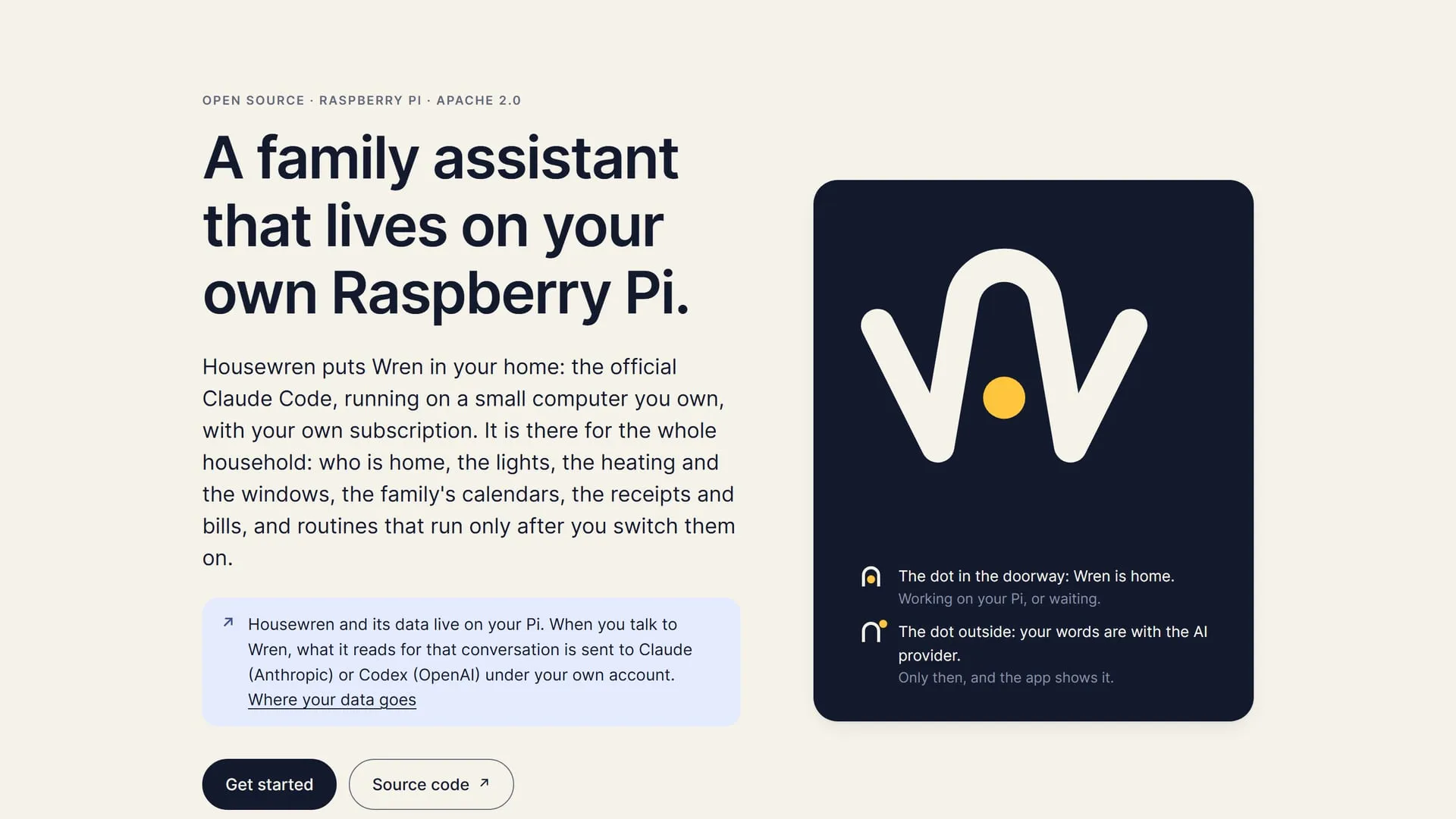
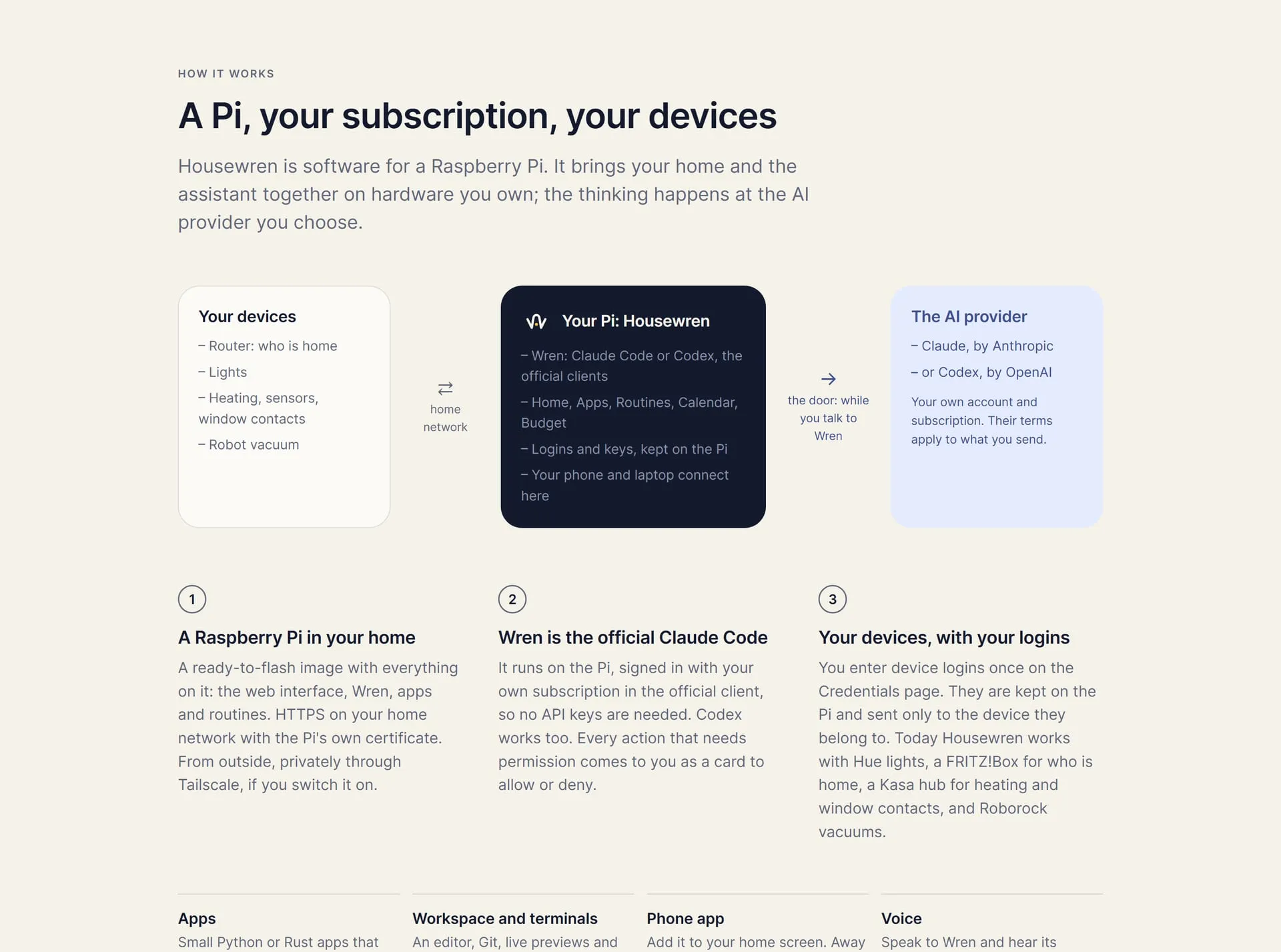
Housewren started as a little box on the shelf where I could use coding agents from my phone. It has grown into something for the whole family: Wren, an assistant that runs on a Raspberry Pi in our home. Wren is the official Claude Code (or Codex) under our own subscription, so there are no API keys to manage and every action that needs permission comes to me as a card to allow or deny.
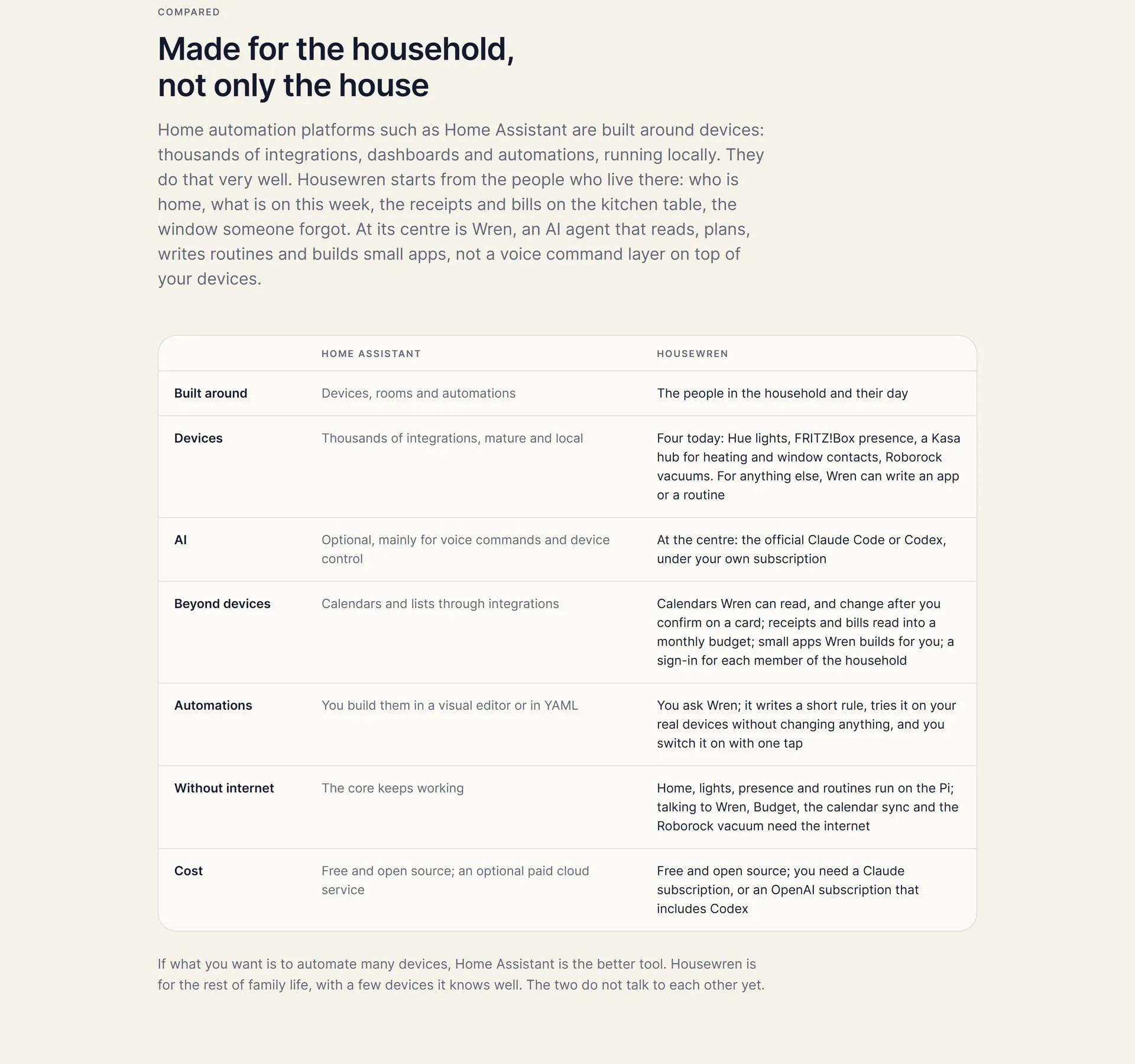
Home automation platforms are built around devices. Housewren starts from the people who live there: who is home, what’s on this week, the receipts on the kitchen table, the window someone forgot.
What it does today
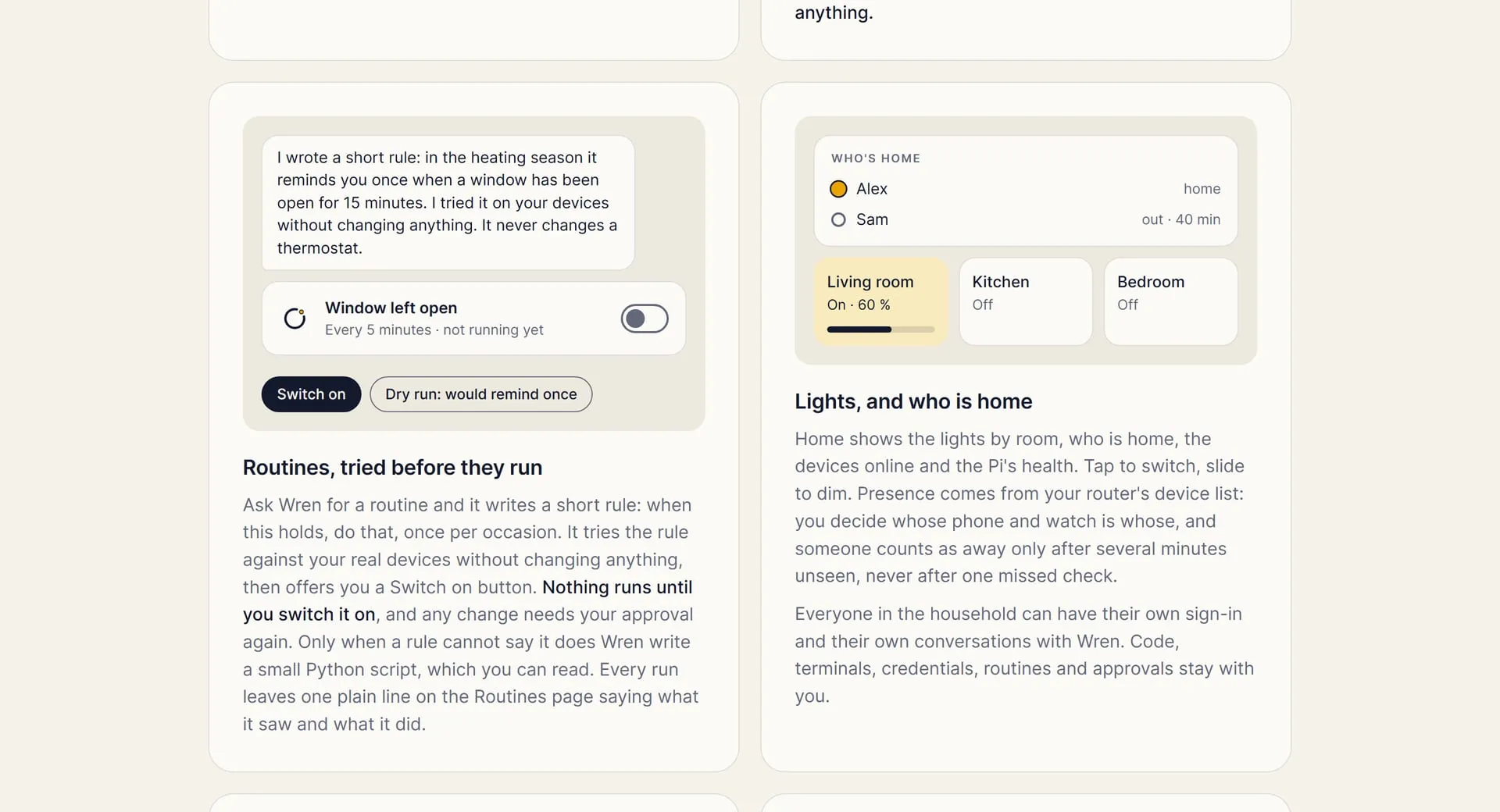
- Who’s home, and the lights. Presence comes from the router’s device list, by person, and someone counts as away only after several minutes unseen. Lights by room, heating and window contacts, and the robot vacuum.
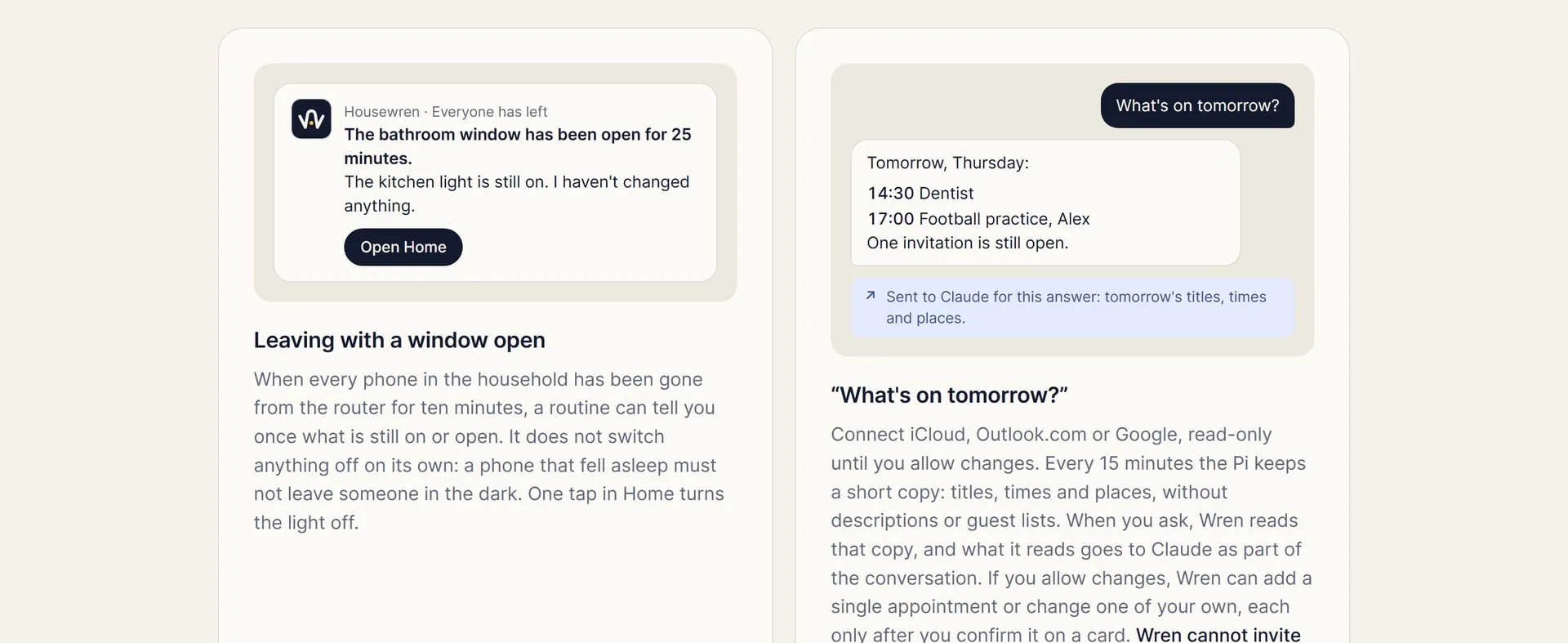
- Calendars. iCloud, Outlook.com or Google, read-only until you allow changes. Wren can then add or change a single appointment, each time only after you confirm it.
- Receipts and bills. Photograph a receipt or upload a PDF. Claude reads it in an empty folder with no tools, Housewren checks what comes back, points out what doesn’t add up, and keeps a monthly budget that Wren can answer questions about.
- Routines, tried before they run. Ask for one and Wren writes a short rule, tries it against the real devices without changing anything, and offers a Switch on button. Rules can react to buttons, motion and contact sensors. Any change needs approval again.
- Voice. Speech recognition and reply voices can run on the phone or laptop itself.
- A workspace underneath. Editor, Git, live previews and Claude Code and Codex terminals that keep running and work from a phone. Wren builds small apps there too.
- A household, not one user. Everyone gets their own sign-in and their own conversations. Code, terminals, credentials and approvals stay with the owner.
Honest about data
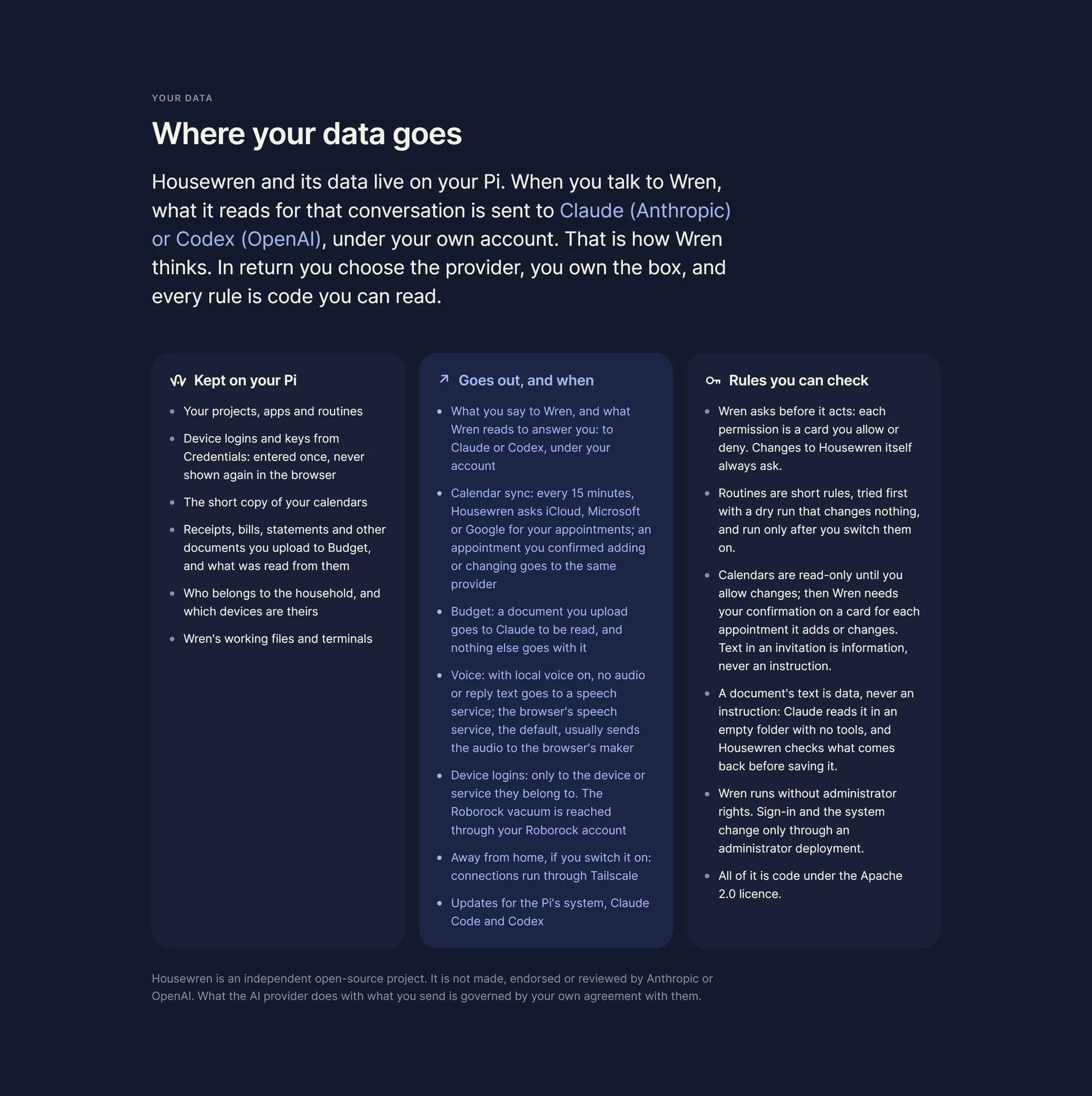
The website doesn’t say data “never leaves the home”. It says where things live and names what goes out: what Wren reads for a conversation goes to Claude or Codex under our own account; calendar sync talks to the calendar provider; a document for Budget goes to Claude and nothing else goes with it.
Underneath, device logins live in a separate credential service that the agents can’t read, Wren runs without administrator rights, and a nightly, encrypted backup leaves the Pi. A privacy guard in the repository blocks private folders, keys and tokens from ever being committed.
Where it stands
Version 1.0 is a ready-to-flash Raspberry Pi OS image, tested against a real Pi with end-to-end checks. It works with four device families today (Hue, FRITZ!Box, Kasa, Roborock). Setting it up still means building an image and writing an SD card, so it suits people who are comfortable with a terminal. Briefings and mail are plans, not features. Apache-2.0 licensed; the public repository and housewren.dev follow once it’s ready.
Facts
- Status
- Underway
- Category
- Tool · Self-hosting · AI
- Made with
- Python, aiohttp, Claude Code, Codex, tmux, systemd, Caddy, Tailscale, CodeMirror 6, xterm.js, Piper, Raspberry Pi
- Logged
- November 2026
Credits
- The images are from the Housewren website. Its screens are illustrations with invented names and rooms, not screenshots.
- Built on CodeMirror (MIT), xterm.js (MIT), aiohttp (Apache-2.0), esbuild (MIT) and Piper voices (CC0). Claude Code and Codex are the vendors' own clients and aren't bundled. Housewren is not affiliated with Anthropic, OpenAI or Home Assistant.