Culinary quests · Cooking
Höppner-Frikadellen
German meat patties, rebuilt from first principles. Juicy inside, a dark crust outside, and every step has a reason.
- Serves
- 4 people, 8 Frikadellen
- Time
- About 1 hour, half of it waiting
- Logged
- November 2026
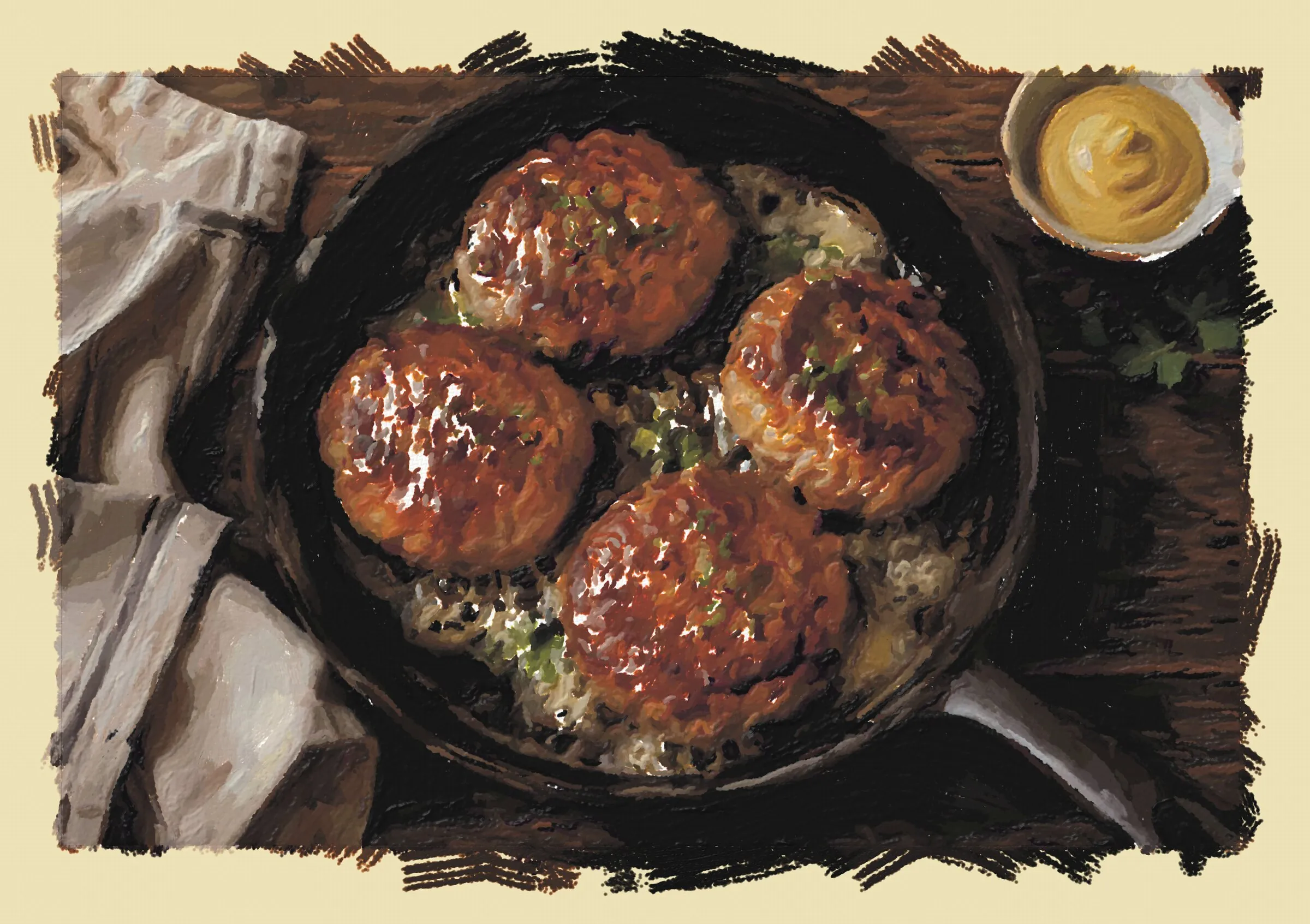
It started with a request for the best Frikadellen we could make, for a family dinner. So instead of taking a recipe, we asked why Frikadellen turn out dry, rubbery or bland, and fixed each cause. We cooked them, they turned out great 🙂, and nobody thought of taking a photo. That’s why the pictures here are paintings, not photos of ours.
Ingredients
- 600 g mixed minced meat (beef and pork), not lean, well chilled
- 1 bread roll from yesterday (about 50 g)
- 80 ml milk
- 1 large onion, finely diced
- 1 tbsp butter, for the onion
- 1 egg
- 1½ tsp fine salt
- 1 tsp medium-hot mustard
- 1 tsp Worcestershire sauce
- 1 tsp dried marjoram
- ½ tsp freshly ground black pepper (halve it for children)
- 1 pinch freshly grated nutmeg
- 2 tbsp chopped parsley (frozen works too: 10–15 g, added straight from the freezer)
- 3 tbsp clarified butter (Butterschmalz), for frying
- 1 tbsp butter, to finish
Method
- Make the panade. Tear the roll into pieces, pour the milk over it and leave it for 10 minutes. Mash it into a smooth paste with a fork. Don’t squeeze it out: the soaked starch is what holds the juices later.
- Sweat the onion. Cook it gently in the butter for about 5 minutes until glassy, without browning. Let it cool completely. Cooked onion is sweet instead of sharp, and it no longer leaks water into the mixture.
- Salt and knead the meat. Knead the cold meat with the salt for about a minute, until it turns slightly sticky. That is the binding, so the egg doesn’t have to do all the work.
- Fold in everything else. Add the panade, onion, egg, mustard, Worcestershire sauce, marjoram, pepper, nutmeg and parsley. Mix only until evenly combined. Keep kneading and you get sausage.
The Thermomix does the chopping, sweating and mixing. Tested on our TM7 for that family dinner, and the family was more than happy. Always use reverse for the meat: forward, the blade turns it into paste.
- Sweat the onion. Halve the onion; no need to dice it. If your parsley is fresh leaves, chop it first in the dry bowl (3 sec / speed 8) and set it aside. Onion: 4 sec / speed 5, scrape down. Add the butter: 4 min / 120 °C / speed 1, without the measuring cup. Tip into a large bowl and let it cool completely.
- Make the panade. Bread roll in pieces: 5 sec / speed 6. Add the milk: 5 sec / speed 3. Leave it for 10 minutes, then add it to the bowl. Don’t squeeze it out.
- Salt and knead the meat. Cold meat and salt: 30 sec / reverse / speed 3, helping with the spatula through the lid.
- Fold in everything else. Add the bowl’s contents, egg, mustard, Worcestershire sauce, marjoram, pepper, nutmeg and parsley (frozen goes in straight from the freezer): 15 sec / reverse / speed 3. No longer.
Into the pan
Same on every cooking station: only a pan makes the crust.
- Fry a test patty. Fry a teaspoon of the mixture, taste it, and adjust the seasoning. This is the most important step.
- Shape and chill. With wet hands, shape 8 patties about 2 cm thick and press a small dip into the middle of each, so they don’t dome up. Chill for at least 15 minutes, so they hold together in the pan. The whole mixture weighs about 850 g, so each one is roughly 105 g. For children, make 10 smaller ones.
- Build the crust. Heat the clarified butter in a heavy pan (cast iron or stainless steel) over medium-high heat. Lay the patties in and leave them alone for 3 minutes. Turn them and give the other side 3 minutes.
- Finish with butter. Turn the heat down, add the butter and keep spooning the foaming butter over the patties until they reach 72 °C in the middle, about 6–8 minutes more.
- Rest. Give them 3 minutes before eating, so the juices settle.
Why it works
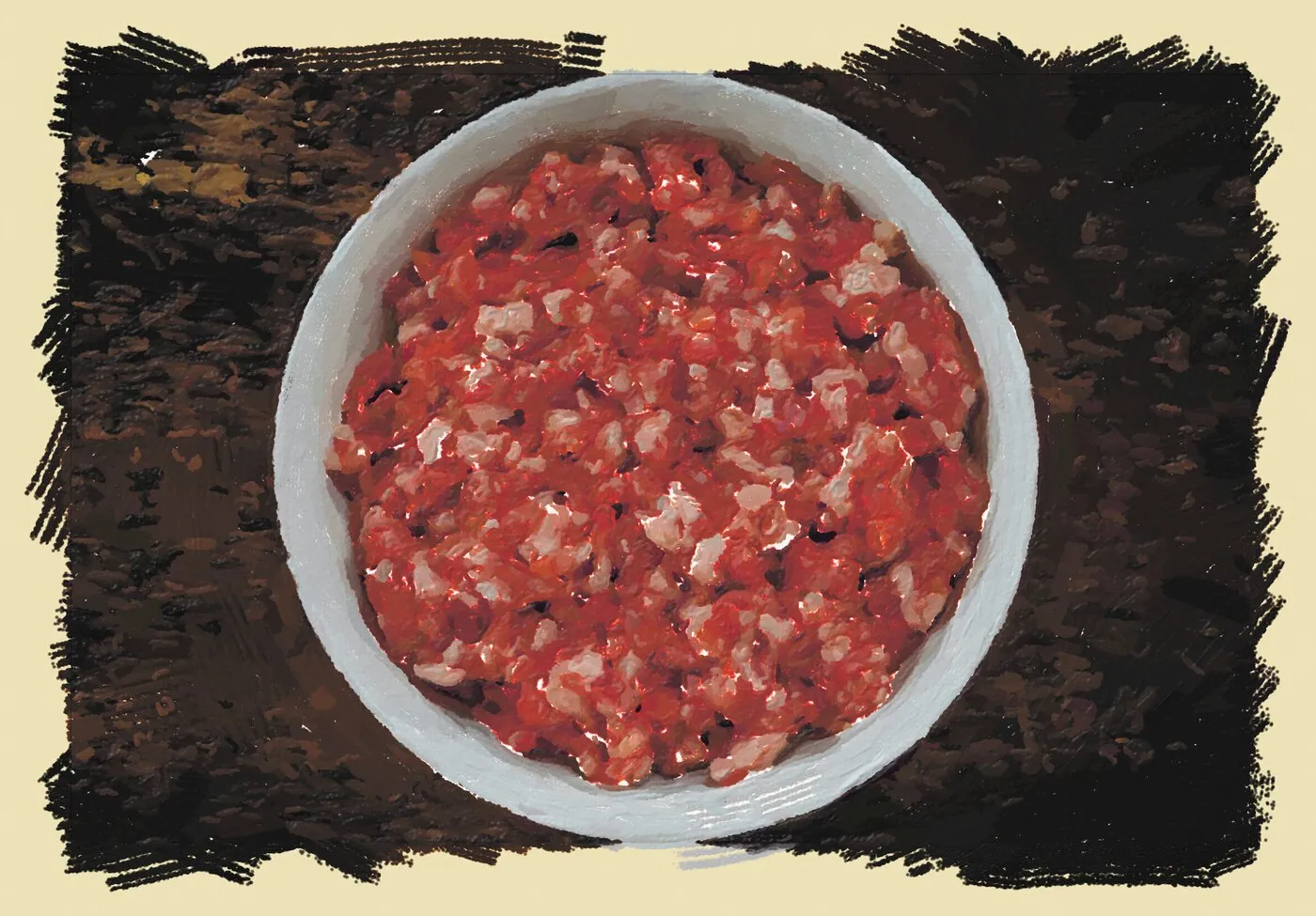
Fat is juiciness.
Lean mince makes dry Frikadellen, however careful the cooking.
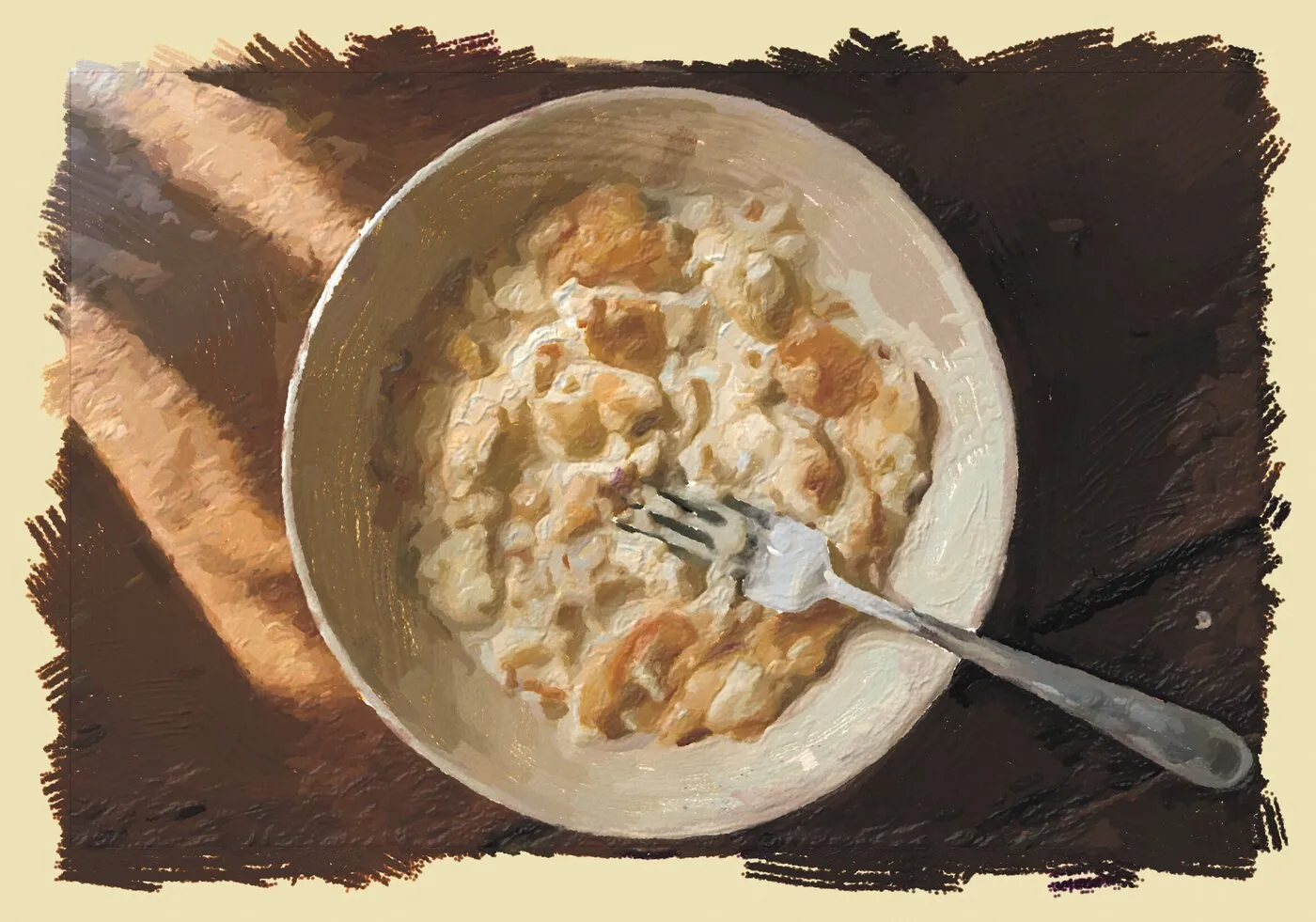
The panade stores moisture.
Bread and milk hold water that the meat proteins would otherwise squeeze out.
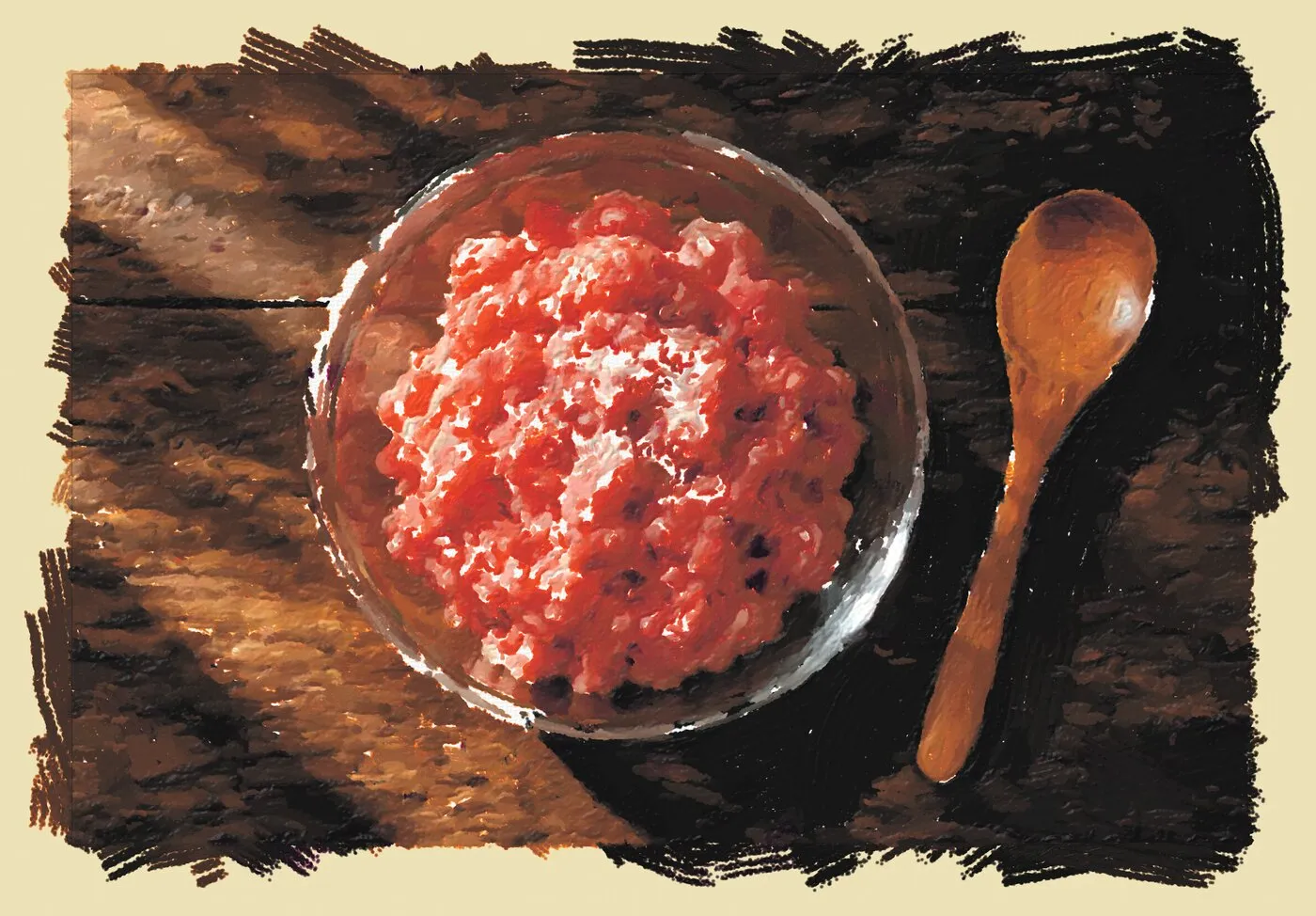
Salt first, then a short mix.
Salt makes the meat bind; too much kneading makes it tough.
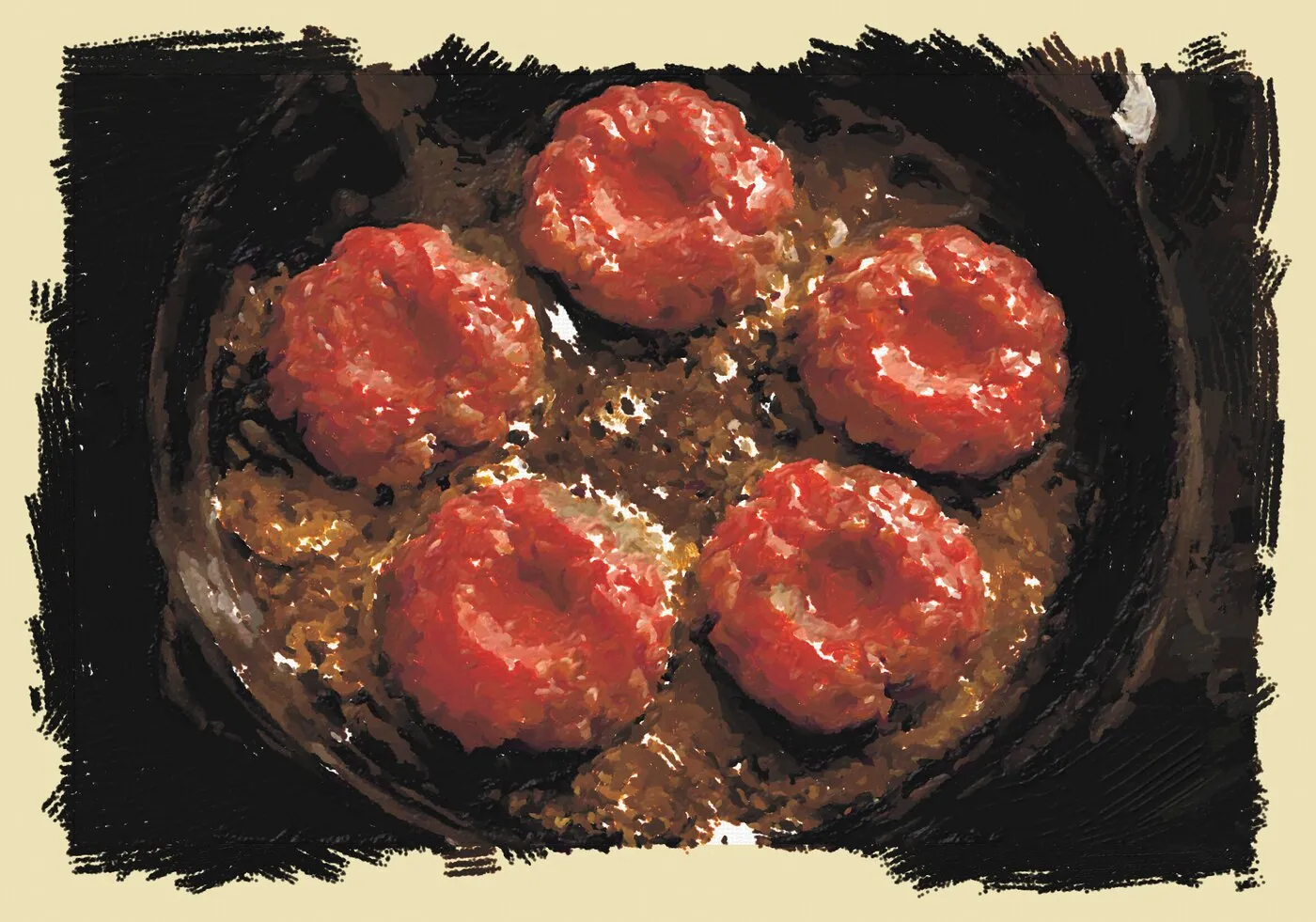
Cold meat, hot pan.
A dark crust outside while the inside stays tender.
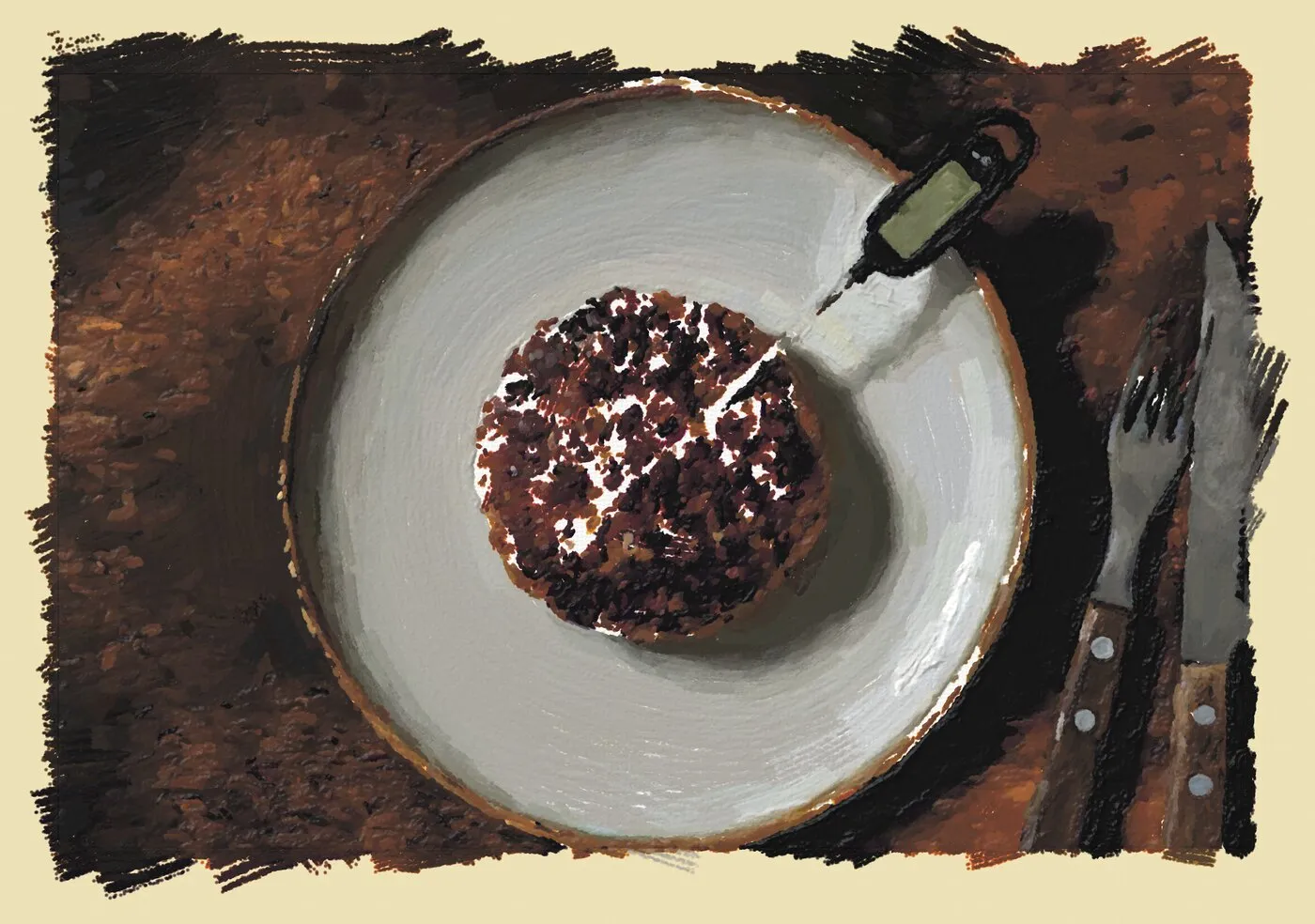
A thermometer beats guessing.
72 °C is cooked through, and not a degree drier than it has to be.
Oil on simulated paper, painted by Painter Studio from food photographs generated with Magnific One.