Painter Studio
A painter that looks
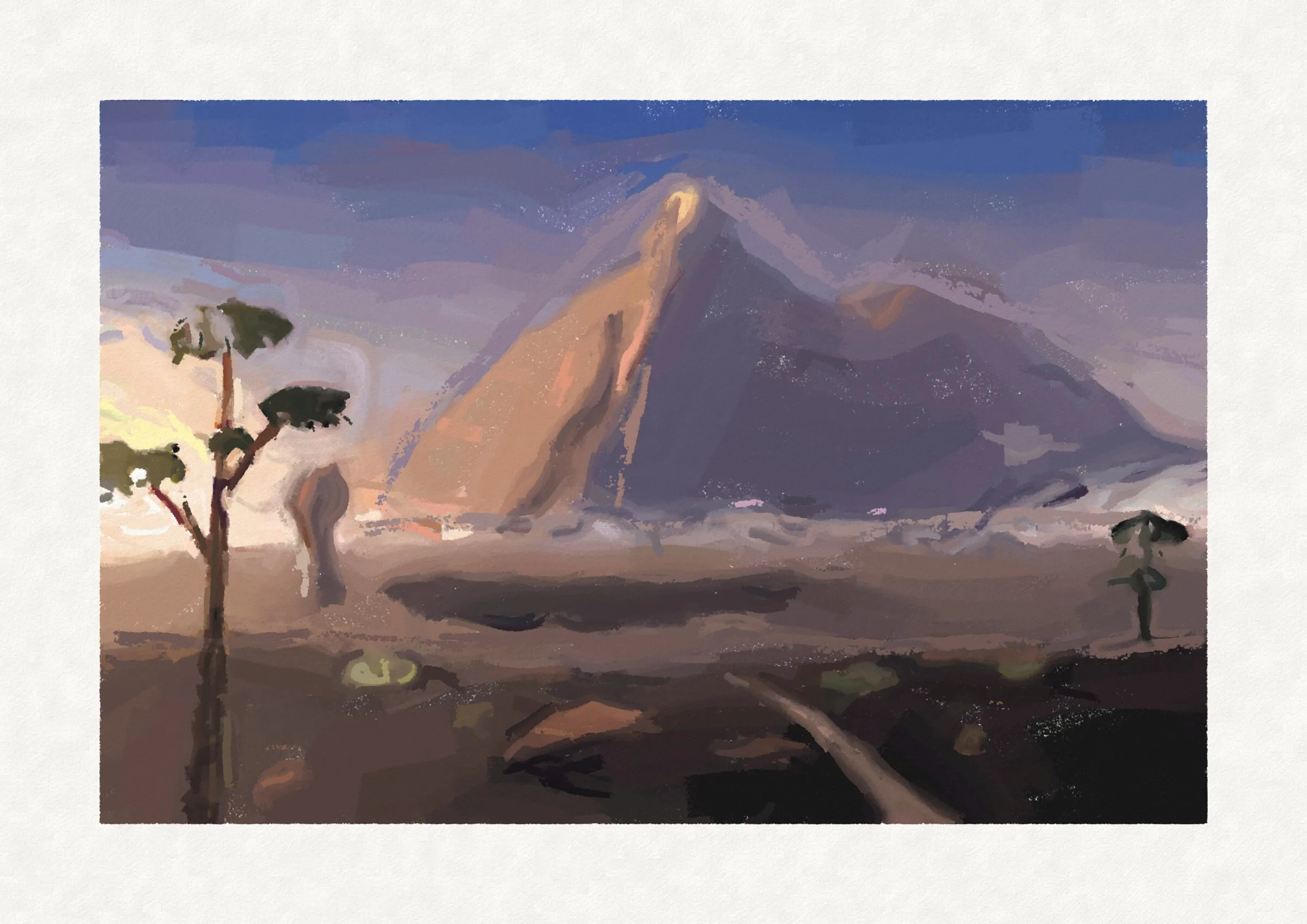
A language model paints with simulated oil, watercolour and charcoal, and looks at the sheet after every passage before deciding what to do next.
Most “AI art” generates a finished picture in one step. Painter Studio does it the slow way, like a person: a model holds the brush, puts down one passage at a time on a simulated sheet of paper, then looks at the result and decides what comes next.
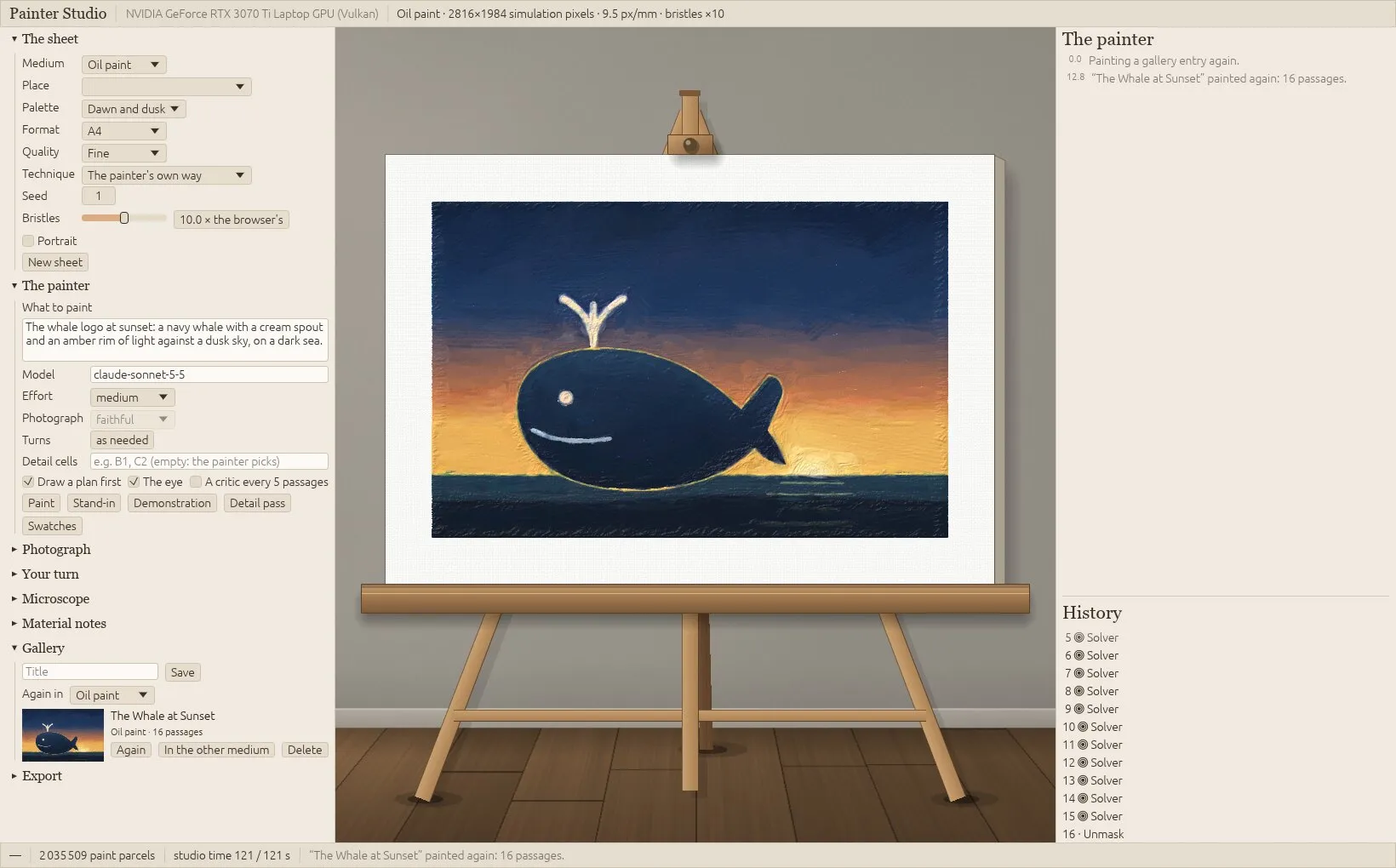
The whale on this site was painted by Painter Studio too: from a reference drawing, stroke by stroke, by its solver alone. No language model was involved in that one. The film above shows it happening: a screen recording of the app, the one video file on this site.
The material
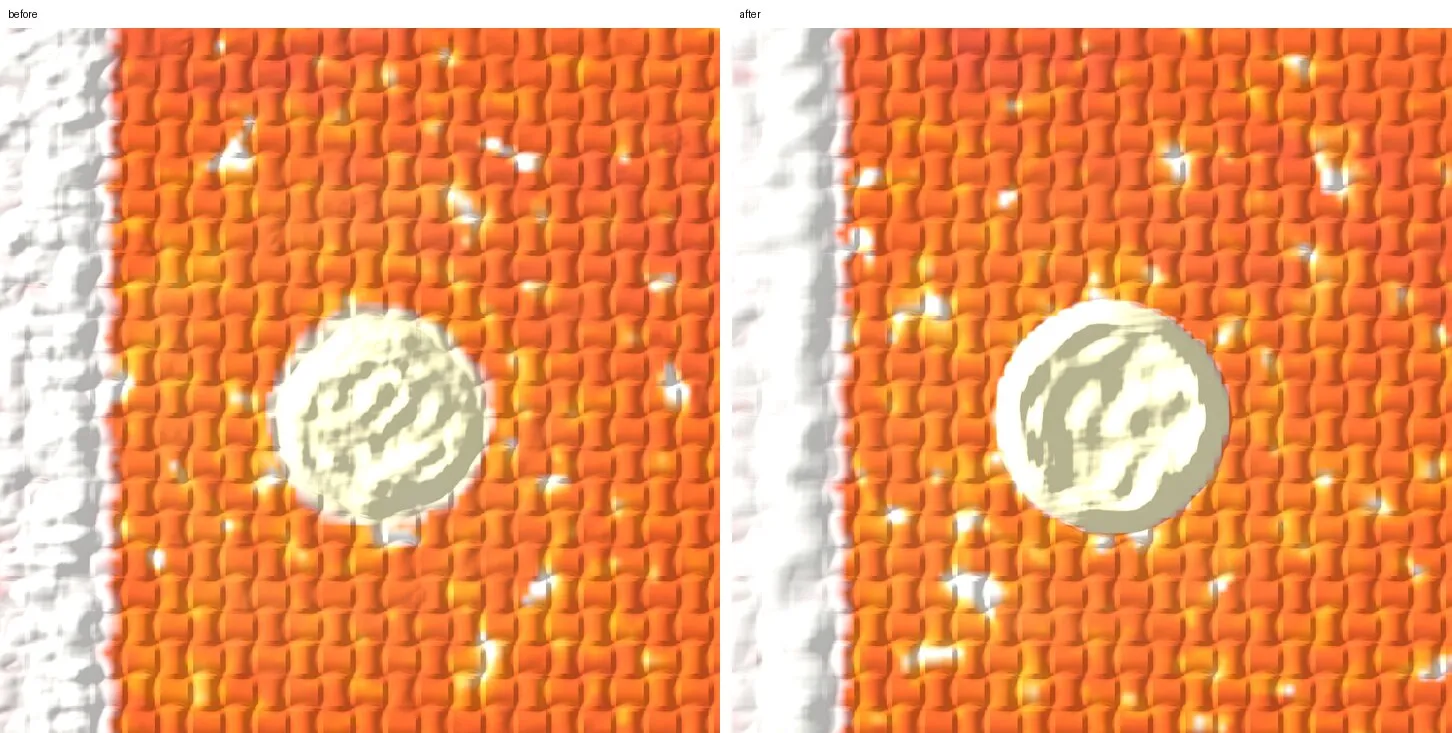
The paint is a GPU particle simulation of six media: oil, oil pastel, watercolour, coloured pencil, graphite and charcoal. Paint, dust and water are particles. Bristle brushes are bending chains of particles. Pencils and sticks scrape pigment onto a procedural paper texture.
Watercolour runs on a grid: it flows downhill, wicks along the paper fibres and dries faster at the wet edge, which gives the typical hard rims. Salt, granulation and lifting work too. Colours mix physically (Kubelka-Munk in eight spectral bands across 23 pigments) instead of blending RGB values.
The painter
Before painting, the model sketches the composition as named shapes. After every passage it gets an “eye” report: the sheet squinted down to five values, where it differs most from the reference, and which pigment mixes would fix it. It can ask for a closer look at any part of the sheet. Every few turns an independent critic with no memory of the process judges the painting.
The model speaks a small passage language (fill, glaze, drybrush, edge, lift, mask, salt, knife…), and a “hand” turns that into real strokes with the tools of each medium. For tight matching work a solver lays strokes where the sheet is furthest from the target and corrects for how the wet paint actually responded.
Browser, then Rust
It started as a single-file WebGPU page. The native Rust port paints the same picture 3 to 7 times faster on the same GPU with ten times the bristles, and roughly halves the colour error. In version 1.0 the app measures the sheet in 30 mm squares before and after each turn and takes back anything that got worse.
40 milestones, each with a note on how it was verified.
Facts
- Status
- Underway
- Category
- Simulation · AI
- Made with
- WebGPU / WGSL, Rust, wgpu (Vulkan), egui, JavaScript, Claude, Playwright
- Logged
- November 2026


Credits
- The painter is Claude (Anthropic). Paint, paper and brushes are simulated; no third-party images.